Timothy Hay for Rabbits: Why It’s Such a Popular Everyday Choice
Timothy hay for rabbits is one of the best-known feeding choices, but its popularity can also create confusion. Is it genuinely different from other grass hays? How can you recognise it? And does a rabbit have to eat Timothy hay to have a healthy diet?
The short answer is that Timothy is a dependable, fibrous grass hay that suits many adult rabbits very well. It is not the only suitable hay, though. Orchard grass, meadow hay and ryegrass can all have a place too. The important thing is to understand what each type offers, choose good-quality hay and make sure your rabbit eats plenty of it every day.
This guide explains the differences without declaring one grass “good” and another “bad”.
Why hay matters so much for rabbits
Hay is not simply bedding or something to nibble between meals. It should make up the largest part of a rabbit’s diet and be available at all times.
Long strands of fibrous grass encourage rabbits to graze and chew throughout the day, matching their natural feeding behaviour. This repeated side-to-side chewing helps support natural tooth wear, while fibre helps keep the digestive system moving normally. Hay also gives rabbits an important natural activity: searching, selecting and grazing.
The RSPCA’s rabbit feeding guidance recommends making fresh hay or grass the main part of a rabbit’s diet, alongside a smaller amount of suitable greens and pellets.
Whatever variety you choose, the first question should therefore be: will my rabbit eat a generous amount of this hay every day?
What is Timothy hay?
Timothy (Phleum pratense) is a perennial grass grown for hay in many temperate parts of the world. It produces leafy growth, firm stems and distinctive cylindrical seed heads. Depending on when it is cut and the conditions in which it grew, a bale may contain a different balance of each.
For rabbits, Timothy’s appeal lies in that natural mixture of textures. The softer leaves are tempting to forage through, while the longer stems and seed heads add structure and encourage sustained chewing.
Timothy works well as an everyday hay for many healthy adult rabbits. It provides fibrous, relatively moderate-energy forage without the richness of legume hays such as alfalfa.
How can you recognise Timothy hay?
The easiest feature to spot is the seed head. A mature Timothy seed head is compact and cylindrical, often described as looking like a tiny bottle brush or cat’s tail. It sits at the end of a long, upright stem.
In a bag or bale, you might notice:
- long, fairly firm stems;
- narrower leaves mixed among the stems;
- dense, cylindrical seed heads;
- a sweet, fresh, grassy smell.
However, hay cannot always be identified confidently by looking at a handful. Seed heads may be absent, broken during handling or less developed in an earlier cut. Colour is not a reliable identifier either: sunshine, rainfall, maturity, drying and storage can all affect it.
If you want to know exactly which grass you’re buying, choose a supplier who knows the crop from the field onwards and labels each product clearly.

Why is Timothy for rabbits such a popular everyday choice?
It offers useful structure and variety
A typical crop contains a mixture of leaves, stalks and seed heads rather than one completely uniform texture. That gives rabbits the chance to sort, forage and choose different pieces while still eating the same grass variety.
It encourages plenty of chewing
The long strands and fibrous plant structure take time to eat. This supports the long periods of chewing that are important for a rabbit’s teeth and digestive system.
It is generally suitable for adult maintenance feeding
For most healthy adult rabbits, the aim is a high-fibre diet that is not unnecessarily rich in energy. Timothy is widely used because it generally fits that role well when offered as part of a balanced diet.
It is familiar and widely available
Timothy is well recognised by rabbit owners and vets, making it easier to find and to keep feeding consistently. Nevertheless, it remains an agricultural crop rather than a factory-made product, so one harvest will never look or feel exactly like the next.
Tasty does not always mean best suited
Rabbits are very good at showing us which foods they find most tempting. What they cannot tell us is whether the tastiest option has the most suitable fibre, sugar and energy profile for their individual needs.
Put simply:
A rabbit eating a hay enthusiastically tells us it finds it tasty; it does not necessarily tell us it has the most suitable fibre, sugar or energy profile for everyday feeding.
That does not mean a highly palatable hay should be avoided. It means appetite is only one part of the decision. Body condition, health, activity level, the rest of the diet and the amount of hay eaten all matter too.
How Timothy hay for rabbits compares with other hay types
| Hay type | What it is and how it may look | Useful to know |
|---|---|---|
| Timothy hay | A single grass species, often with firm stems and dense, cylindrical “bottle-brush” seed heads. | A dependable, fibrous everyday hay for many adult rabbits. Leaf, stem and seed-head content naturally varies between crops. |
| Orchard grass / cocksfoot | A grass with broad, often softer leaves and a looser, branched flower head. | Usually soft, fragrant and appealing. It can be a useful everyday alternative or be mixed with another grass hay for variety. |
| Meadow hay | A mixture of grasses and sometimes other meadow plants rather than one variety. Its appearance can be very varied. | Offers natural variety, but the exact grasses and nutritional profile can change with the field, season and harvest. Buy from a supplier who can explain what is in it. |
| Ryegrass hay | A grass that can resemble Timothy once cut. When present, its flatter seed head has small spikelets arranged along the stem rather than one dense cylinder. | Highly palatable and digestible. It is typically higher in natural sugars and energy than Timothy, although the precise level varies with variety, maturity and growing conditions. |
| Alfalfa hay | A leafy legume rather than a grass. It often has finer stems and small leaf clusters. | Richer in protein and calcium. It is commonly used for growing, pregnant or nursing rabbits, or where a rabbit-savvy vet recommends it, rather than as the main hay for a typical healthy adult. |
No table can tell you the exact nutritional content of an individual bale. Grass variety matters, but so do the field, weather, soil, stage of growth, time of cutting and storage. Laboratory analysis is the only way to give exact figures for a particular crop.
Where does ryegrass fit?
Ryegrass is a genuine grass hay and certainly has its place. It is particularly palatable, and many rabbits will eagerly choose it over other varieties. Its digestibility and higher energy value are among the reasons farmers often favour ryegrass when producing forage for livestock.
Ryegrass is generally higher in water-soluble carbohydrates—the plant’s natural sugars—and provides more readily available energy than Timothy. That does not make ryegrass a bad hay. It simply means owners should understand that the hay their rabbit eats most enthusiastically is not automatically the most appropriate everyday choice in every situation.
A good-quality ryegrass hay may be useful for variety, to encourage a reluctant hay eater or for an animal whose individual needs make a more energy-dense forage appropriate. For a less active rabbit, an overweight rabbit or one whose wider diet is already rich, a more moderate grass hay may be the better everyday foundation. If your rabbit has a diagnosed health condition or a particular dietary need, ask a rabbit-savvy vet for individual advice.
Natural sugar and energy levels are not fixed labels attached to a species. Different cultivars, cutting dates, weather and stages of maturity can all change the finished hay. The comparison is a useful general guide, not a promise about every strand.
What should good rabbit hay be like?
Grass variety is only part of the picture. Whichever type you choose, good hay should be:
- fresh smelling, with a pleasant grassy or naturally sweet aroma;
- completely dry, never damp, warm, mouldy or musty;
- fibrous and varied, with recognisable strands rather than only short dusty fragments;
- stored carefully, away from moisture, contamination and strong smells;
- appealing to your rabbit, so that it is eaten in generous quantities.
Hay does not need to be a particular shade of green to be good. Colour can change during natural drying and storage, and a greener bale is not automatically healthier or more nutritious. Smell, dryness, cleanliness, texture and how readily it is eaten provide a much fuller picture.
Some loose dust and tiny leaf fragments naturally settle during handling, but hay should not release clouds of fine dust. Never feed hay that smells musty or shows any sign of mould.
Which hay should you choose for your rabbit?
For most healthy adult rabbits, start with a clean, good-quality grass hay that they will eat abundantly. Timothy is an excellent place to begin, but it is not a test that every rabbit must pass.
Orchard grass may suit a rabbit that prefers a softer texture. A varied meadow hay can make grazing more interesting. Ryegrass may have a useful role when its greater palatability or energy is appropriate. Mixing suitable grass hays can also encourage foraging and give a rabbit more textures to explore.
Watch the whole rabbit rather than focusing only on the name printed on the bag. Consider:
- how much hay is actually being eaten;
- whether droppings remain plentiful and normal for that rabbit;
- body weight and condition;
- dental and digestive history;
- activity level;
- pellets, treats and other foods in the complete diet.
Introduce a different hay gradually by mixing it with the familiar one. Sudden dietary changes can upset a rabbit’s digestive system, and a cautious introduction also makes it easier to see whether the new hay is accepted.
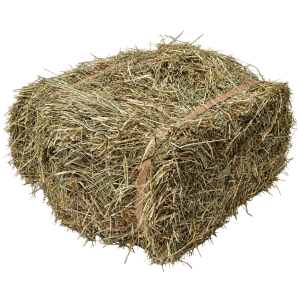
Our Devon Timothy hay
When choosing Timothy hay for rabbits, it helps to know where the crop came from and how it was made. At The Hay Hutch, we see our hay as a standing crop before cutting, through the traditional haymaking process and finally as the bale or pack delivered to your door. That matters because identifying a grass is much easier in the field than from a handful of cut stems.
Our first-cut Timothy hay is grown and traditionally sun-dried in Devon. It is then carefully dust extracted and packed with its natural mixture of leafy strands, firm stems and fluffy seed heads. As with every genuine crop, its colour, aroma and proportions of leaf, stem and seed head can vary from one harvest to another.
You can choose our 3kg 1st Cut Timothy Hay Mini Bale or the smaller 1.5kg Timothy Hay Pack. If your rabbit enjoys different textures, you can also explore our Orchard Hay and Premium Meadow Hay. For convenient repeat deliveries, see how our Flexible Hay Box Subscription works.
Frequently asked questions
Is Timothy the only suitable hay for rabbits?
No. Timothy is a very useful everyday grass hay, but it is not the only suitable option. Orchard grass, meadow hay and other clean grass hays can also form part of a healthy adult rabbit’s diet. Quality and the amount your rabbit eats are extremely important.
Can rabbits eat ryegrass hay?
Yes. Ryegrass is a grass hay and is not inherently “bad” for rabbits. It is often very palatable and is generally more energy dense and higher in natural sugars than Timothy. Whether it is the best main hay depends on the rabbit and the rest of its diet.
Why does my rabbit seem to prefer ryegrass?
Rabbits may favour its aroma, softer leaf and naturally sweeter taste. That enthusiasm can be helpful for a poor hay eater, but preference alone does not tell you which hay is the best nutritional match for everyday feeding.
How can I tell Timothy from ryegrass?
Look at an intact seed head if one is available. Timothy has a dense, cylindrical head resembling a small bottle brush. A ryegrass seed head is flatter, with individual spikelets arranged along the central stem. Without seed heads, confident identification can be difficult, so the supplier’s knowledge of the standing crop is valuable.
Does greener hay mean better hay?
Not necessarily. Natural hay colour is affected by the grass, weather, maturity, drying method and storage. A fresh smell, dry condition, good fibrous structure, freedom from mould and enthusiastic consumption are more useful indicators than colour alone.
Should hay be available all day?
Yes. Rabbits should have constant access to fresh feeding hay and water. Top it up regularly and place it where your rabbit naturally likes to graze, including near the litter area if appropriate.
Can I mix different grass hays?
Yes. Mixing suitable grass hays can add different smells and textures and encourage foraging. Introduce any new hay gradually, particularly if your rabbit has a sensitive digestive system.
What does “first cut” Timothy hay mean?
First cut is the season’s first main harvest from the field. It often contains a varied mixture of leaf, firm stem and developed seed head, but the words “first cut” cannot guarantee a particular texture or nutrient level on their own. Weather, maturity and growing conditions still influence every crop.
Is alfalfa suitable for adult rabbits?
Alfalfa is richer in protein and calcium than grass hay. It can be valuable for young, growing, pregnant or nursing rabbits, and sometimes for an adult with a specific veterinary need. It is not normally used as the main unlimited hay for a typical healthy adult rabbit unless a rabbit-savvy vet advises it.
Is Timothy hay suitable for guinea pigs?
Yes. Timothy is a suitable grass hay for many adult guinea pigs and, as with rabbits, good-quality hay should be available at all times. Guinea pigs also need a reliable daily source of vitamin C from suitable guinea-pig pellets and fresh vegetables, so hay alone does not meet their complete dietary needs. The RSPCA’s guinea-pig feeding guide explains this in more detail.
A simple way to remember it
Timothy hay for rabbits is a dependable everyday choice, but it is not the only suitable hay. There is no need to turn choosing hay into a competition between grass varieties. Timothy is popular because it provides a dependable combination of fibre, structure and moderate energy for many adult rabbits. Other hays offer different textures, flavours and nutritional characteristics, and each can have a useful place.
Choose clean, fresh hay that suits your rabbit, offer it without restriction and judge it as part of the animal’s complete diet—not solely by how quickly the tastiest pieces disappear.
Ready to try it? Explore our Devon-grown 1st Cut Timothy Hay.